
Le Sueur County Bench Warrants Explained
Minnesota courts have several labels for the paper that follows an unfinished court obligation, though bench warrant is the one people say. A judge signs one after a failure to appear, an ignored court order, or a broken release condition. The official triggers number four: missing an appearance on a summons or citation, failing to answer an eligible citation on time, violating a release condition, and a court-order, contempt, or probation issue. Not every lapse produces the same paperwork. A missed payment and a missed criminal hearing do not. Some states call the failure-to-appear paper a capias, a word Minnesota forms never use. Whatever the label, a Le Sueur County warrant search starts with the document's trigger, since that determines which route the court expects.
Note: The county table shows a short description rather than the full order, so the court file is the record to read.
Le Sueur County Failure-to-Appear Warrant Wording
Minnesota's criminal-procedure rules ship the official forms, and one names this process exactly: an application and warrant for obtaining a defendant's appearance for failure to appear on a summons or citation. The same appendix carries a release-condition warrant form and an indictment warrant form. These are statewide documents, so they do not prove that a Le Sueur County case followed any particular one. The current forms sit in the Minnesota Rules of Criminal Procedure appendix.
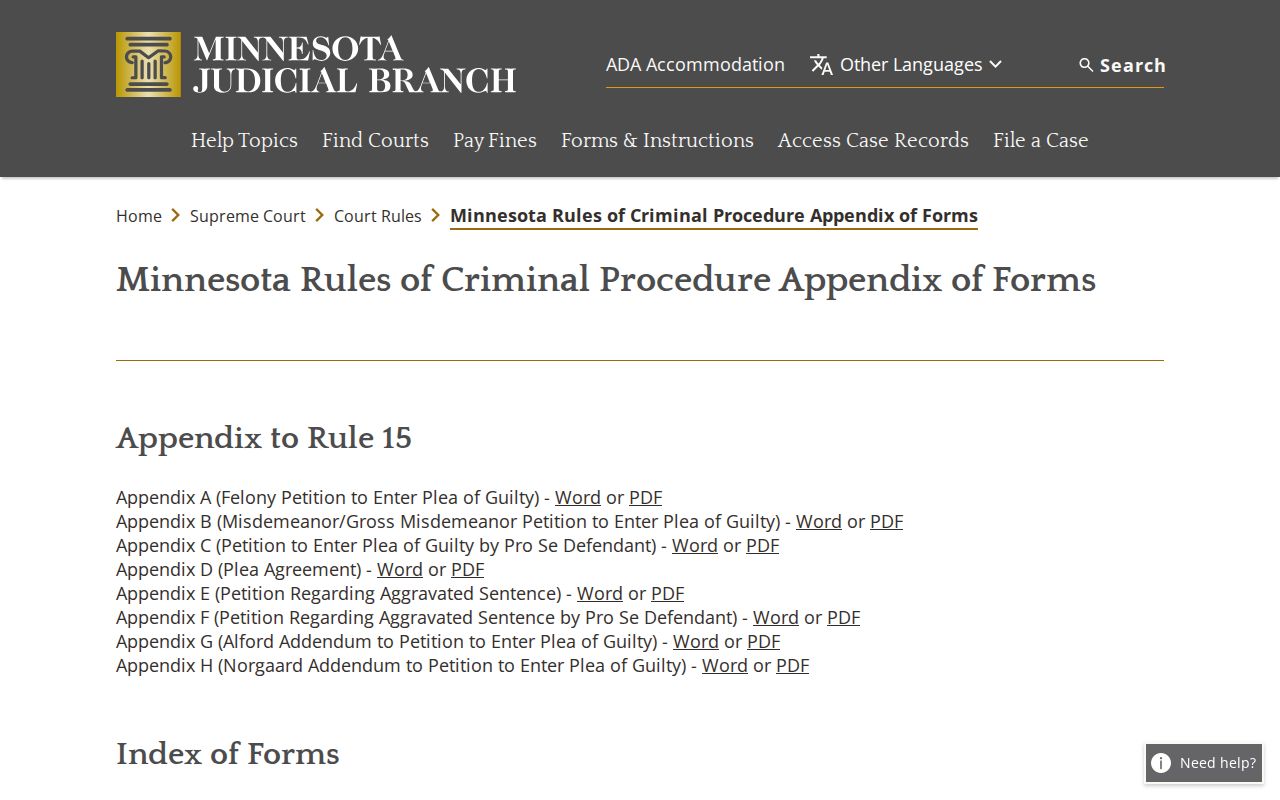
A reader who knows the form name can ask a sharper question.
How Le Sueur County Bench Warrants Are Issued
Every Le Sueur County bench warrant starts at the court. A complaint, a citation, a missed appearance, or an alleged release violation reaches the bench first, and an authorized judge or judicial officer then issues process under Minnesota law and the criminal rules. Court administration records the case. Law enforcement holds the service information that follows. A deputy cannot recall a warrant. A records clerk cannot either. Only the issuing court can act on the order, which is why the first call belongs to court administration. The rules on issuance, content, and execution live in the current Minnesota court rules index.
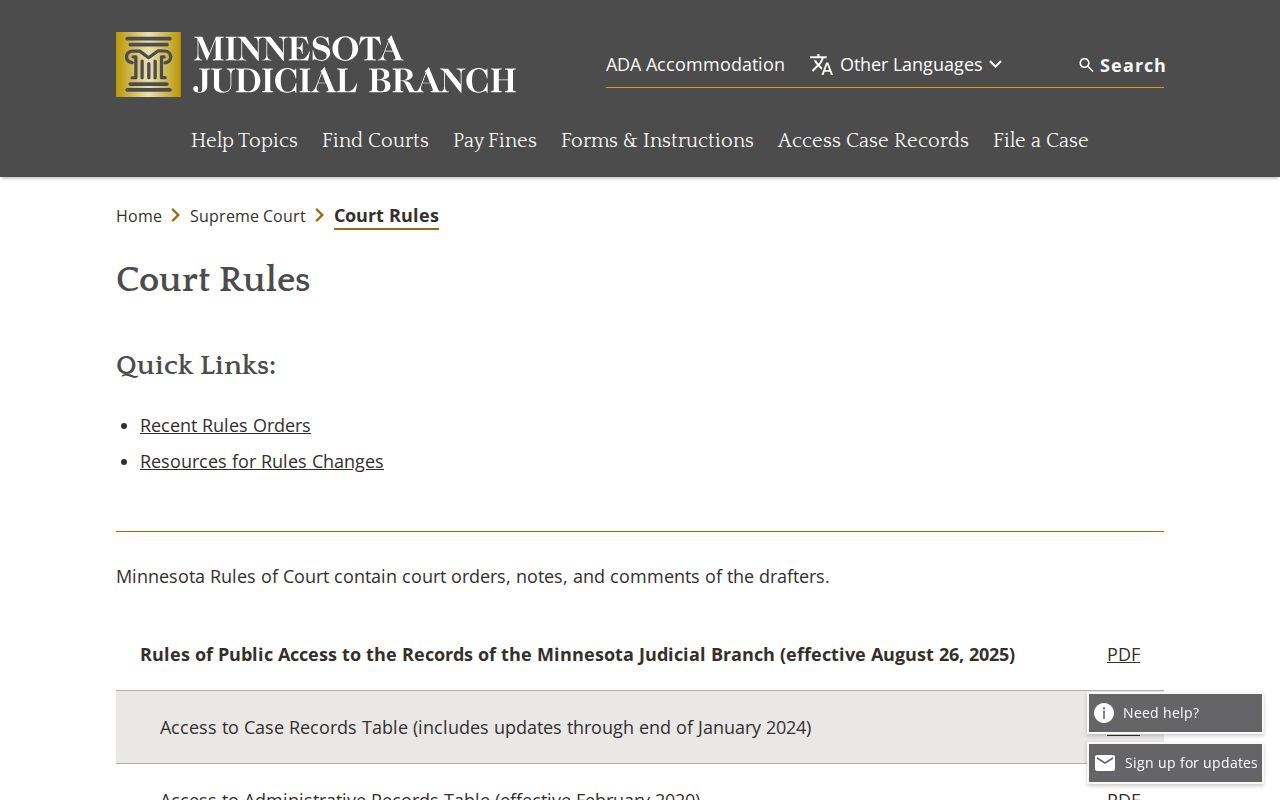
Rule text changes, so check the index whenever a Le Sueur County deadline looks unfamiliar.
From Le Sueur County Citation to Bench Warrant
The Minnesota Judicial Branch gives a person 30 days from the filing date of a citation to pay or schedule an appearance. Miss that step and the consequences stack. Statewide guidance describes a possible warrant, added late penalties, a statutory treatment of failure to appear for certain offenses, notification to the Department of Vehicle Services or the Department of Natural Resources, collections, and surcharges. A Le Sueur County traffic warrant can grow out of a ticket that sat too long.
Warrant flow: Citation filed › 30 days to pay or schedule › missed step › possible warrant and penalties › court or payment-center action › confirmed status.
Bench Warrants and Arrest Warrants Compared
Both documents authorize an officer to make an arrest, and that similarity causes most of the confusion. The difference sits in what came before. An arrest warrant follows an allegation supported by probable cause. A bench warrant follows a case the person did not finish. A Le Sueur County bench warrant usually clears through an appearance, a new date, or a motion. The companion page on Le Sueur County arrest warrants covers the other side.
| Feature | Bench Warrant | Arrest Warrant |
|---|---|---|
| Trigger | Missed setting or release violation | Probable cause of an offense |
| Who Issues It | The judge on the open case | A judge on a sworn application |
| Underlying Case | An open case left unfinished | A new or newly charged offense |
| How It Clears | Appearance, new date, or motion | Surrender, bond, or release |
| First Call | Court administration | Counsel, then the court |
Le Sueur County Release-Condition Warrants
When a person is released from custody with conditions and is later accused of violating one, the paperwork is tied to that violation rather than to an unpaid fine. Minnesota's form appendix titles a document for exactly this situation, and the state's pretrial release rules supply the framework. Payment does not belong in the conversation, because there may be no fine at all. The next step is a hearing or a court instruction. Ask which hearing a Le Sueur County judge requires, and consider counsel when release terms or supervision conditions are at issue.
Le Sueur County Court Calendar Versus Warrant List
Two county publications get mistaken for each other. The daily court calendar is a hearing list that posts at 7:00 a.m. and updates hourly, and restricted matters stay off it. The active warrant table is a law-enforcement publication with seven columns and no status field. Neither settles a Le Sueur County bench-warrant question by itself. A missing calendar entry does not mean a hearing was canceled, and a row that vanishes from the table does not prove a recall was entered.
Key Point: The county table carries no active, served, recalled, or cleared column. A warrant that was already served or recalled can still appear until the next refresh.
Resolving a Le Sueur County Bench Warrant
Resolution runs through the court that issued the order, with the Le Sueur County Sheriff's Office confirming the county list. Call before you travel. The county does not publish warrant-counter or jail lobby hours.
- Find the case or citation number, and note the county list timestamp if a row is showing.
- Call Le Sueur County District Court at (507) 357-8260 and ask what the case requires: an appearance, a new date, or a motion.
- Ask whether a bond, a release order, or a separate hold applies before you make a plan.
- Confirm which documents to bring, and which building handles the action.
- Keep the receipt or order, then ask when the county list will reflect the change.
Caution: Do not assume that paying a fine will clear a bench warrant. Ask the court whether a separate appearance is required.
Le Sueur County Bench Warrant Questions to Ask
A short, specific call gets a useful answer. Court staff can route a procedural question. They cannot give legal advice about the case, and they cannot promise a same-day recall. Four questions cover most situations. Which case is this? Is an appearance required, or is there an authorized payment route? What does the court need, and by when? What should I bring if I come in? The facts that matter are the case number and the date on any notice from a Le Sueur County court.
Note: Ask which office controls the next step and write down the answer, because a follow-up call may reach a different clerk.
Finding the Court That Issued the Warrant
A bench warrant traces back to the court that opened the case behind it. Here that means the Le Sueur County district court. It handles the county's criminal, traffic, civil, family, probate, and juvenile matters, so one courthouse covers almost everything. There is no separate municipal criminal court in Le Sueur County. City police still write tickets under city ordinances, and Waterville's ordinance book sends violators to county court rather than a city bench. So even a warrant tied to a city ordinance lands on the district court's docket. That court alone can recall the warrant or set a new court date. If you are unsure where to go, start with the county warrant overview for direction.
Le Sueur County District Court
Justice Center, 435 E. Derrynane Street
Le Center, MN 56057
(507) 357-8260
Le Sueur County Sheriff's Office
435 East Derrynane Street, Suite 1100
Le Center, MN 56057
507-357-4440